
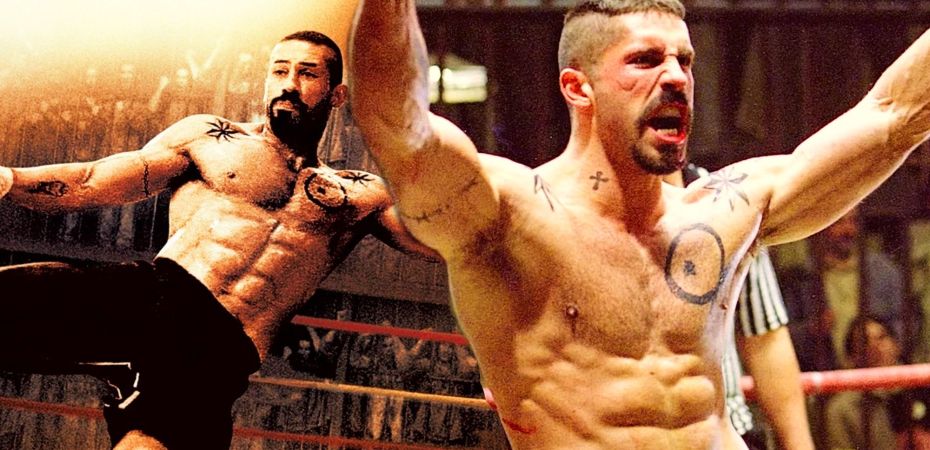
British actor and martial artist Scott Adkins are well recognized for his parts in a number of action movies. He has received training in a number of martial arts styles, including judo, taekwondo, and karate. He is well renowned for doing many of the stunts and combat scenes in his films himself. One may learn more about Adkins’ versatility as an actor and martial artist, as well as the numerous martial arts disciplines he has studied, by contrasting his martial arts technique in other movies.
Scott Adkins as a Martial Artist
British actor and martial artist Scott Adkins are well recognized for his parts in a number of action movies. He has acted in more than 50 films, many of which highlight his remarkable physical prowess and martial arts expertise.
Adkins started out as an actor in the late 1990s, appearing in several low-budget action films and television programs. His appearances in movies like “The Bourne Ultimatum” and “Undisputed II: Last Man Standing” helped him become more well-known in the middle of the 2000s.
Adkins has become a well-liked main guy in the martial arts movie genre in recent years, appearing in movies like “Ninja: Shadow of a Tear,” “Boyka: Undisputed,” and “Accident Man.” He has received training in several different martial arts styles, including taekwondo, karate, and judo, and is well known for doing many of his own stunts and battle sequences.
Adkins has acted in a variety of mainstream Hollywood productions in addition to action flicks, such as “Doctor Strange” and “Expendables 2.” He is a skilled actor who can play a variety of roles, and the business respects him for his commitment and diligence.
All in all, Scott Adkins is a gifted actor who has established himself in the action film industry. He is well-known for his physical capabilities and martial arts skills, and his performances in various movies never fail to excite spectators.
Use of Martial Arts in Modern Films
The physical conflict known as martial arts has its roots all across the world and has been practiced for ages. To beat an opponent, these fighting strategies employ punches, kicks, throws, and other physical maneuvers.
There are several distinct martial arts styles, each with its own distinctive methods and ideologies. Examples include Brazilian Jiu-Jitsu, Kung Fu, Taekwondo, Judo, and Karate. Training in specialized forms, sparring, and contests are frequent components of these disciplines.
Since martial arts have been shown in movies for so long, the action movie genre has evolved to rely heavily on them. Many performers have achieved legendary status in the realm of martial arts films, including Bruce Lee, Jackie Chan, and Jet Li.
Actors like Scott Adkins and Donnie Yen have carried on the legacy of martial arts being included in movies in recent years. These actors are well-known for their extraordinary physical prowess and martial arts expertise, and they frequently carry out the actions and combat sequences on their own in their films.
Overall, martial arts continue to fascinate audiences with their dynamic and physically taxing combat tactics and play a key part in the action movie genre.
Comparing Different Martial Arts in the Films
Comparing two or more items in order to recognize their similarities and differences in the act of comparison. This method can be helpful for comprehending and examining several facets of a subject, such as the martial arts techniques shown in movies.
Each distinct martial arts style has its own special methods and philosophy. To comprehend how these disciplines differ from one another and how they are applied in the movie, they may be compared and contrasted.
One may contrast the martial arts styles shown in karate movies with judo movies, for instance. Judo is a Japanese martial art that emphasizes throws and grappling, whereas karate is a Japanese martial art that stresses striking techniques. One might learn more about the contrasts between these two approaches and how they are applied in the movie by contrasting them.
Comparing various martial arts styles is one thing, but one could also contrast how these styles are portrayed in movies. One may, for instance, contrast the usage of physical effects with CGI in action movies or the choreography and filming of martial arts.
A comparability is a great tool for comprehending and evaluating the different martial arts disciplines shown in movies overall.
 Trending New Movies